Jan Kucera began his Healthy Youth ministry about five years ago. He primarily visits small elementary school pupils, addressing topics related to relationships among children, with a particular focus on challenging classroom groups. And he’s great at it—see for yourself!
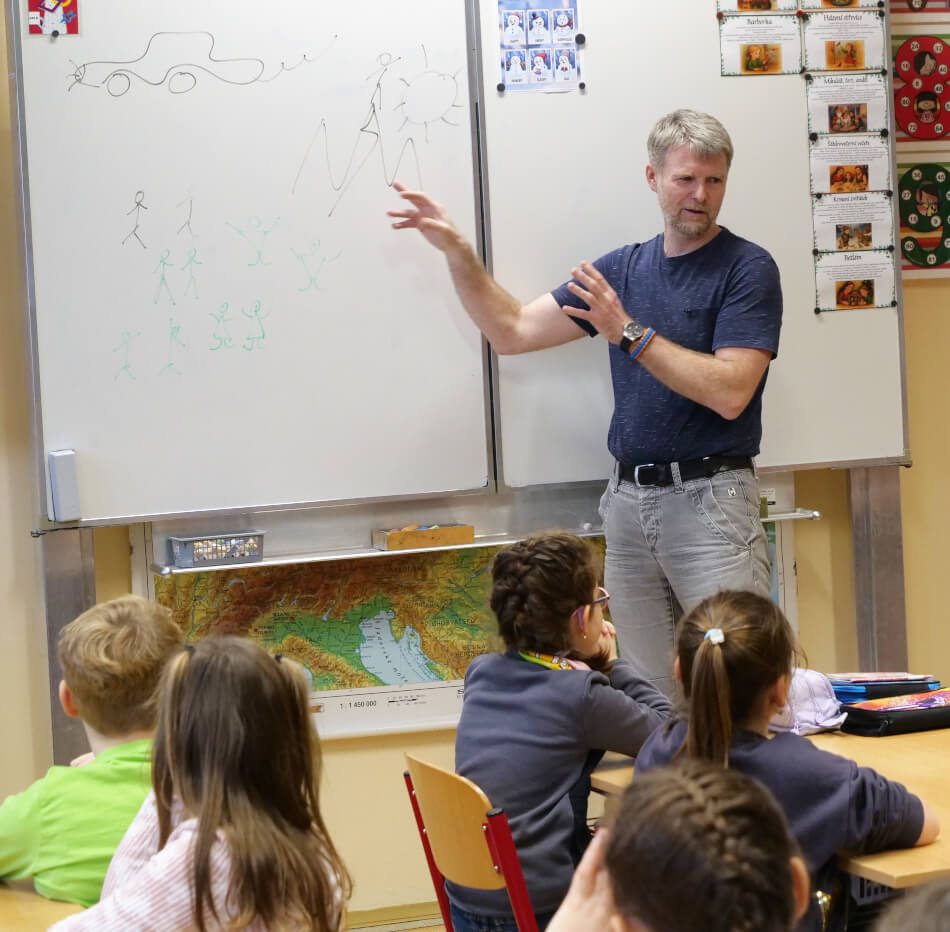
One of the ways Jan keeps everyone’s attention is by switching between different activities—for a moment, he draws on the board.
Jan isn’t the only Healthy Youth worker visiting elementary school children. What’s remarkable is that, as a man, he specifically chose to work with this age group.
And that becomes clear to everyone right from the start of the program.
He’s able to connect with the young pupils on a deep level, and they quickly recognize this and place a great deal of trust in him.
After just a few minutes, the children sense that there is someone here who truly cares for them and, at the same time, knows how to keep their occasional outbursts in check in a “manly” way—taming their occasional mischief so that they don’t see it as restriction, but rather as good life advice.
With love, but clearly and firmly.
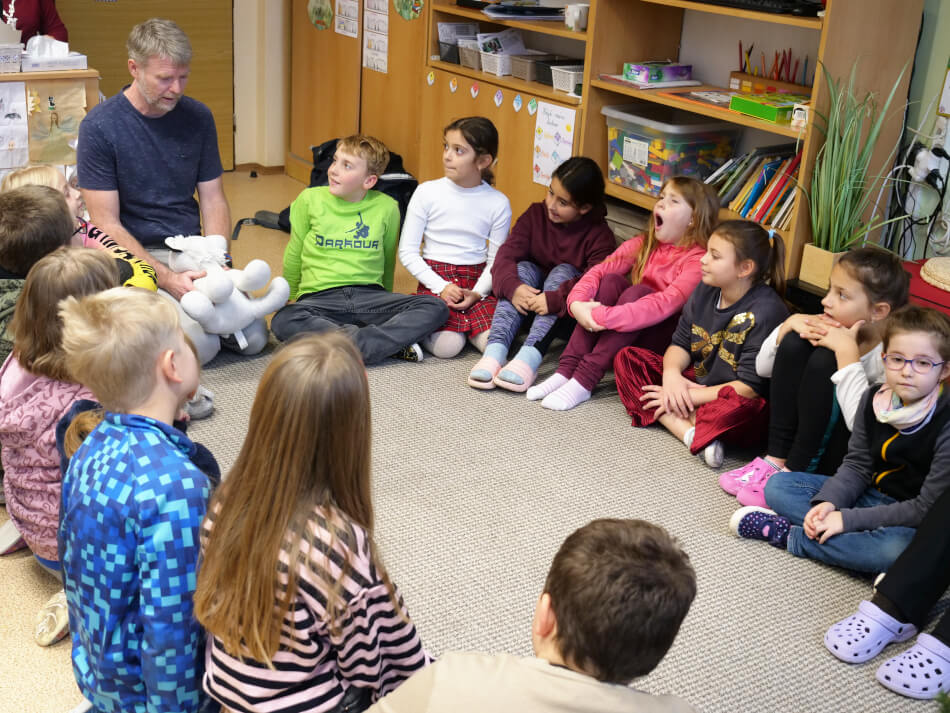
To reflect on the game, Jan sits down with the children in a circle on the carpet.
I’m amazed at how well he does it and what he’s able to get out of the children thanks to his approach and charisma.
They’re engaged, they listen, they cooperate with him and with each other, and when an inappropriate remark slips out, they let themselves be reined in and corrected.
I’m in a regular third-grade class at an elementary school in a typical Czech town, and I’m watching a program called Everywhere Is Good, But Home Is Best with interest.
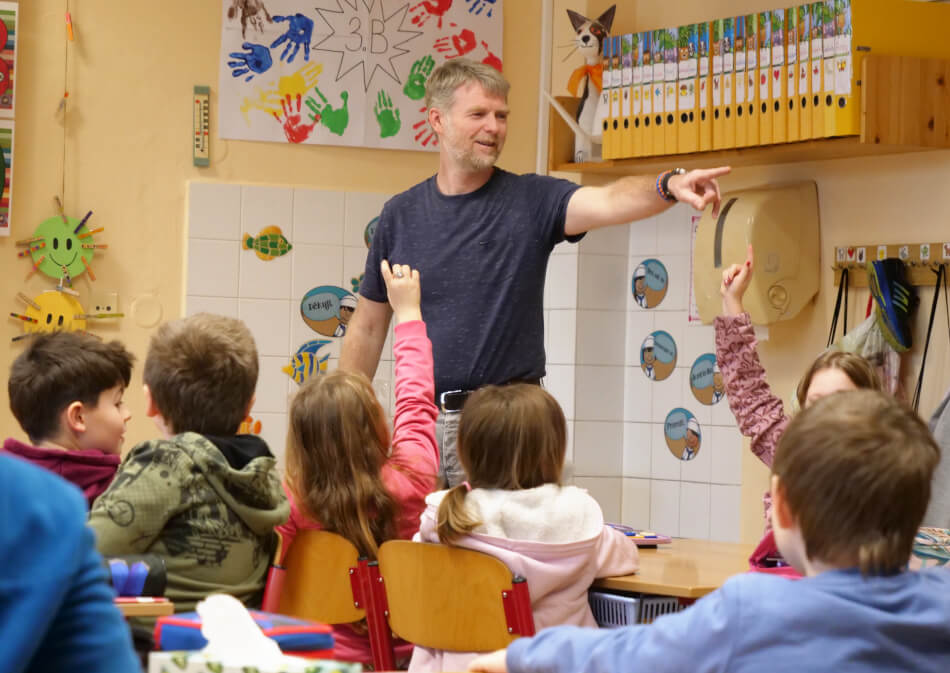
I like that Jan explains the topic clearly, taking the children’s age into account. He keeps their attention by quickly switching between activities:
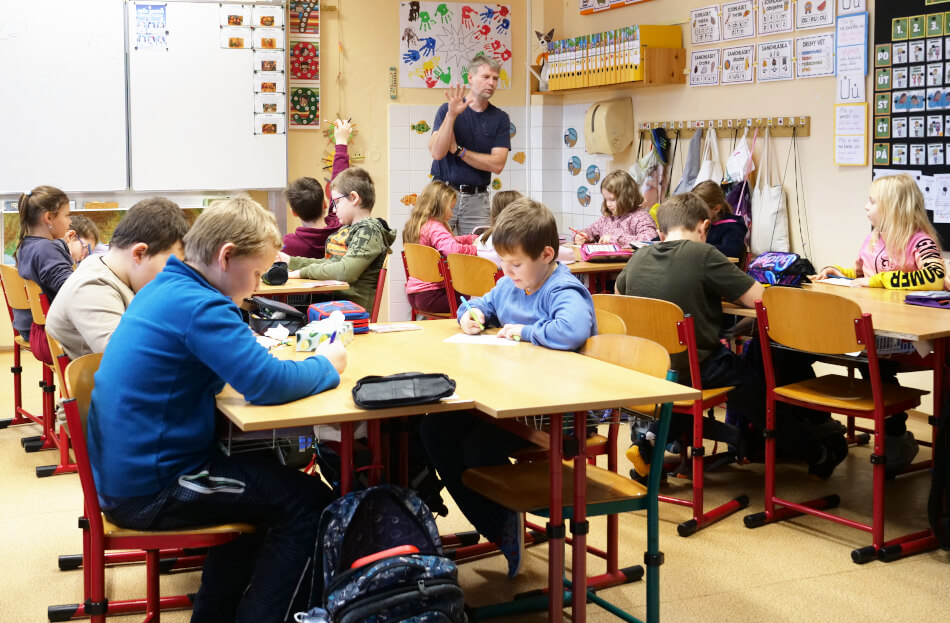
Next, the children work on an individual assignment—learning to be independent.
He draws on the board for a moment, talks, plays a supplementary story on video, gives the children a chance to speak, or has them work together in small groups.
When he used the term ‘mind map’, I cringed a little, but then he immediately asked the third-graders if they knew what it was. I was surprised that two of them raised their hands and tried to explain the term. When Jan took over, I was amazed at how he could explain this almost complex psychological concept to children so simply and clearly.
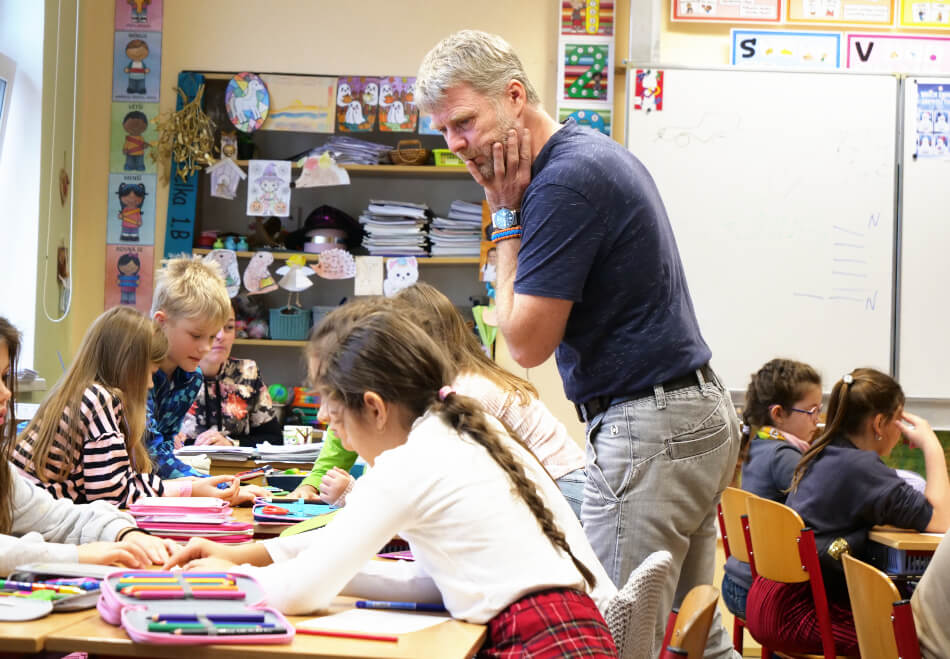
Work in small groups is also essential, as it helps children learn to cooperate, listen to one another, and communicate.
In much the same way, my heart leaps with joy during the debates and children’s group work, when Jan succeeds in challenging traditional notions about school and how children often find it boring—they realize that school doesn’t have to be boring at all. I think the teacher’s heart rejoices as well, because through his explanations and support, Jan opens up new possibilities for her to continue working with the pupils and the topic.
The entire program and Jan’s approach reflect a deep respect for the teaching profession and support for teachers’ work. And as Jan confirmed to me, this is also one of the core ideas of the entire program—to support teachers and reinforce their value in the hearts of children.
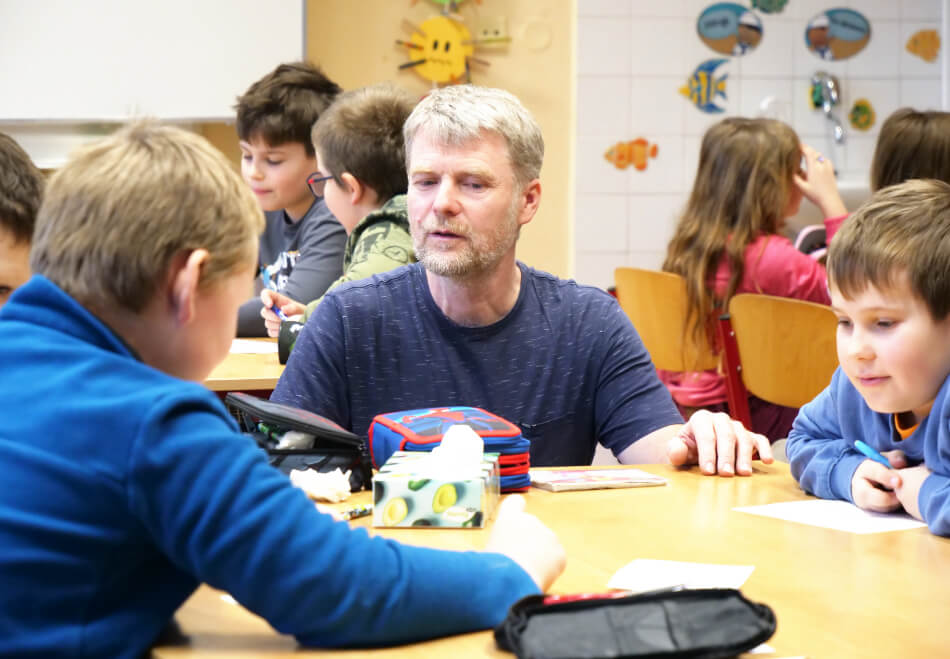
What’s important is that Jan is always ready to help, offer advice, provide additional information, or clarify things—always with his characteristic kindness, willingness, and patience.
When the bell rings for the next class—and thus the end of the program—some are amazed at how quickly today’s program has flown by, while others loudly express their desire to continue. But everything must come to an end, and so Jan leaves after chatting with some of the children and receiving feedback from the teacher and her assistant.
The teacher makes sure that Jan will be back in a year at the latest. She tells me it would be great if more brave, mature men could visit Czech schools like this and give kids the chance to see good male role models in action!
Martin Stavjanik, the Authorized Supervisor of the HY Program workers