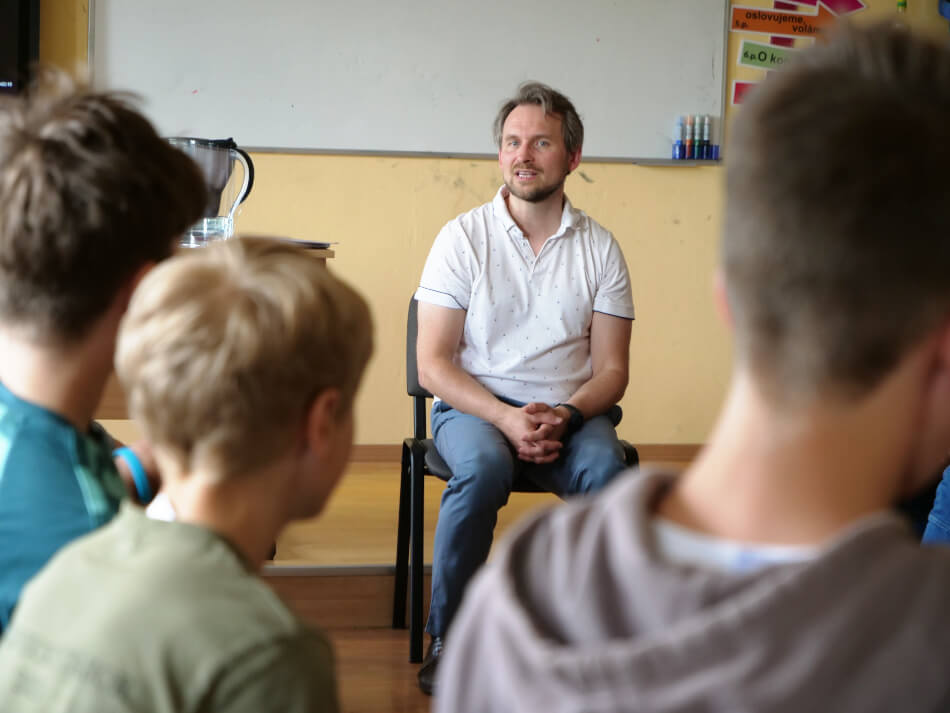
Vit is one of the experienced members in the Healthy Youth ministry. Perhaps that is precisely why he is able to connect so wonderfully with children through his kind and compassionate approach. Fifth- and sixth-grade pupils who gathered for a program on the topic of The Dangers of the Internet were able to experience this firsthand.
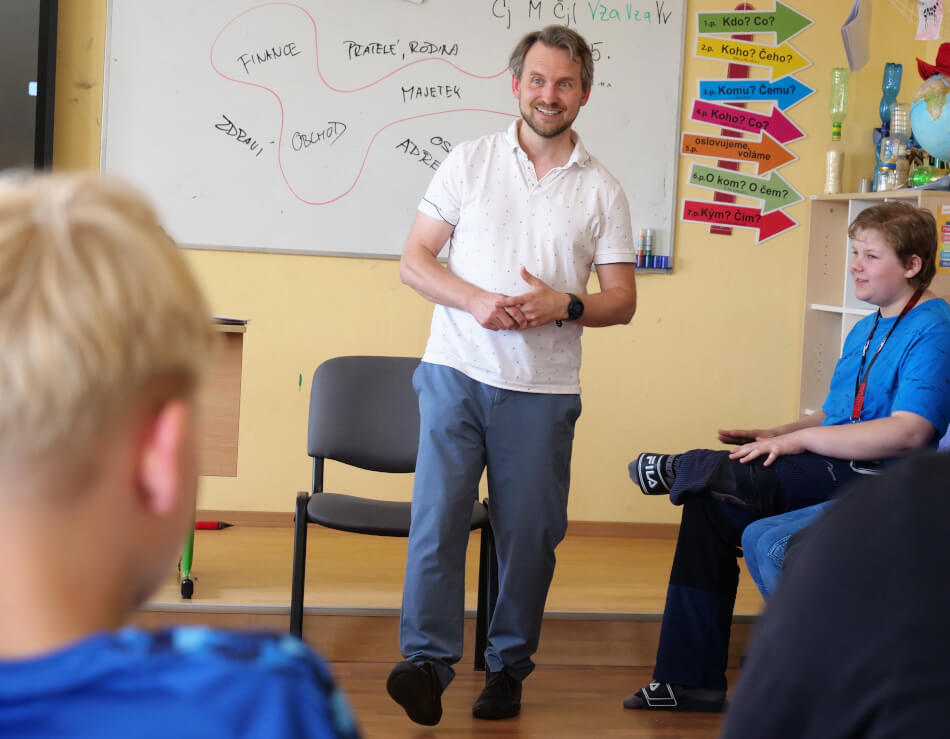
The online world touches various aspects of our lives. Thanks to this program, children can better understand this.
After Vit introduces himself and has the children introduced themselves as well, he “tests” his audience with a little attention test: “Whoever agrees with the program rules, raise your left pinky finger.” After a moment’s hesitation, everyone in the room holds up their pinky finger above their head. Vit masterfully holds their attention with these small details.
He does this not only through a brief foray into statistics to explain to the children the potential dangers they might encounter online, but especially through an interesting instructional video in which, as part of an experiment, a man in a tent demonstrates his “clairvoyant” abilities—only for it to soon become clear that it was all a hoax, because the people who came to have their “thoughts read” had been vetted behind the scenes using their public social media profiles.
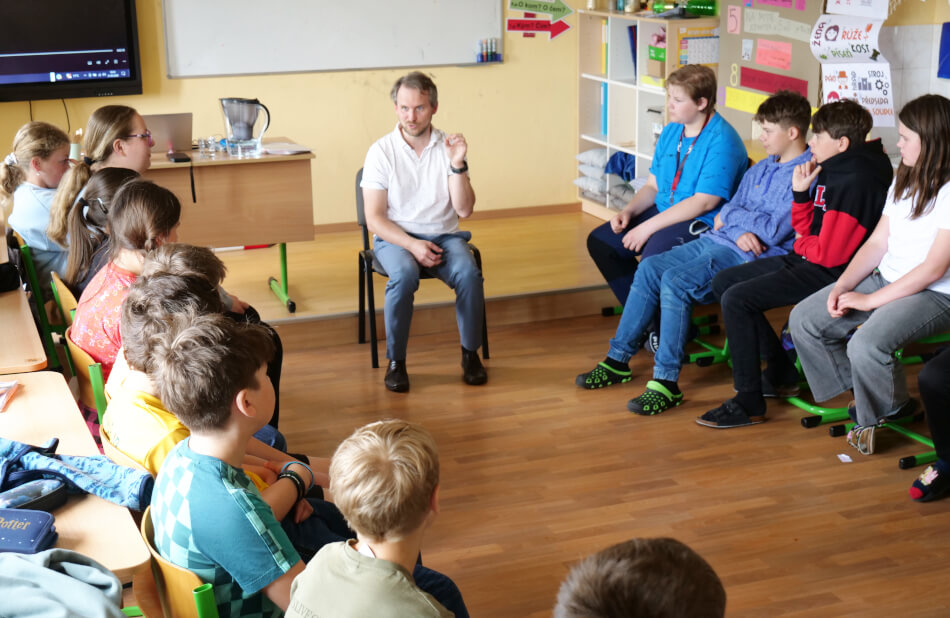
The children listen attentively to the program. Vit illustrates the meaning of his words with telling statistics.
The comparison of the online world to public spaces on the street is also very apt and fitting, along with the idea that we would never say in public what we often share on social media.
To give the students a much-needed break to move around, a game follows where they can get active while also sharing with one another how and which social media platforms they use.
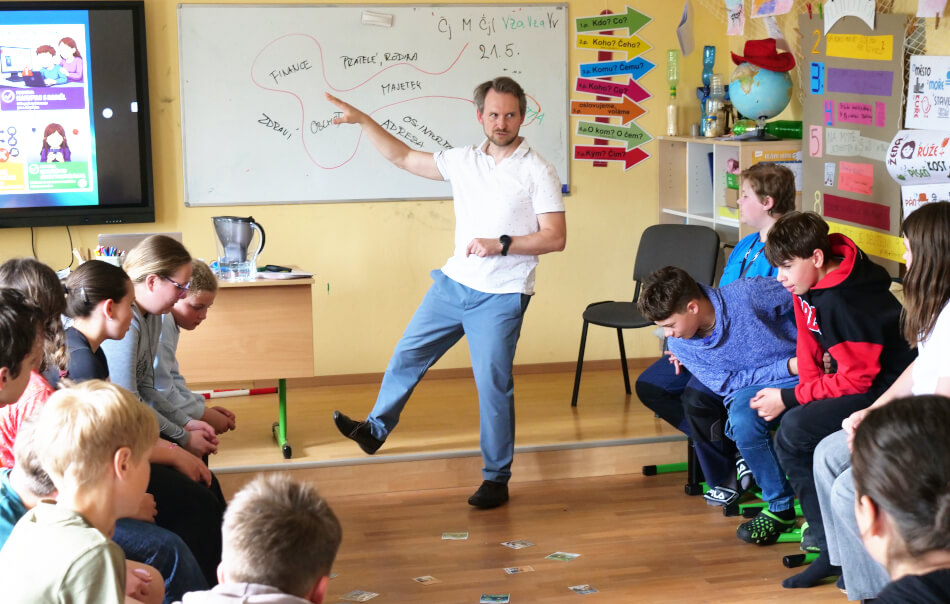
What kind of program would it be without a variety of games and activities? Just explain the rules, and we can get started.
Later on in the program, pupils also work in smaller groups, giving them the opportunity to discuss together how to behave appropriately online and what not to do.
I think even adults need this kind of training these days, a view shared by the classroom teacher, who regularly facilitates these discussions. At the same time, according to Vit, this is also confirmed by statistics showing that people around the world lose the equivalent of up to 6 billion crowns each year as a result of online scams.
Real-life stories that illustrate people’s lack of awareness about the risks involved are also an important part of the program.
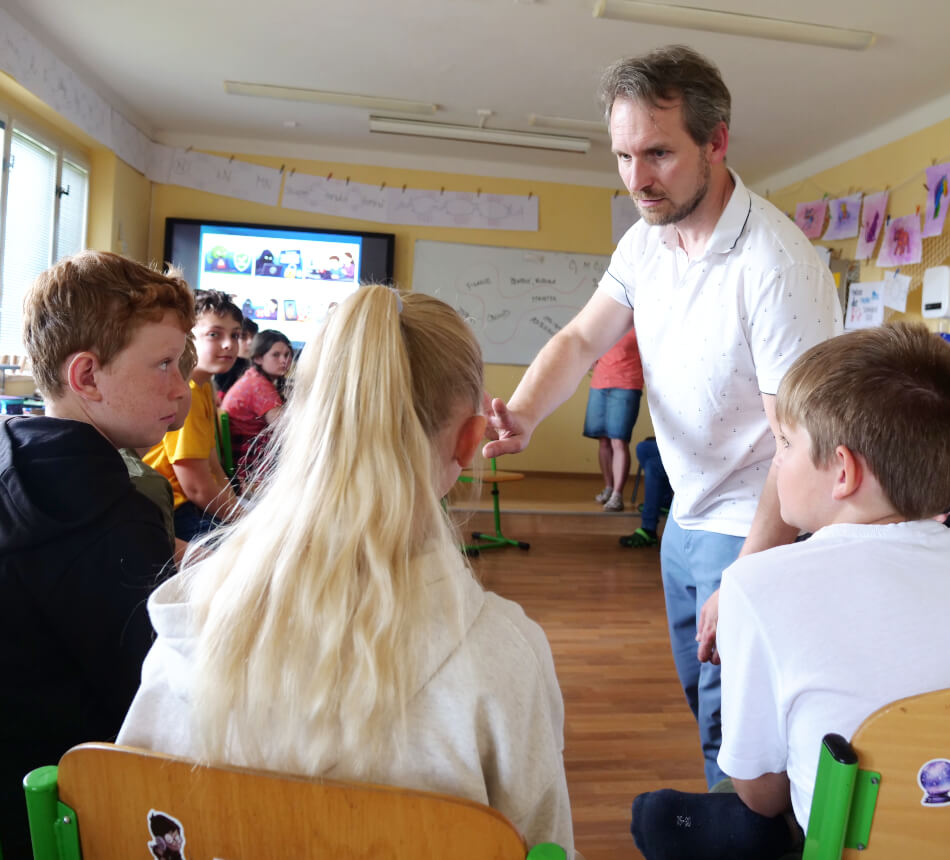
Vit gives children the opportunity to express their opinions, thoughts, and impressions… It’s good when the program takes the form of a dialogue or a group discussion on a topic.
The program is very dynamic and practical—it feels like the two hours flew by in the blink of an eye. The session concludes with an interesting experiment. Vit invites the audience: “Close your eyes and imagine that you’re invisible. Anyone who wants to can say what they’d like to do or experience if they were invisible.”
Suggestions include: watching what someone is doing; scaring someone who hurt me; making fun of someone, etc.
Vit then reveals the point: “You can do all of that to others in the anonymity of the online world and social media.” A simple but powerful idea. The pupils leave enriched by this experiential program, which was a true eye-opener for many of them, and will hopefully help them avoid becoming another victim of online scams in the future.
Martin Stavjanik, the Authorized Supervisor of the HY Program workers