

Vojtech has been the Healthy Youth worker for three years, but with his calm and thoughtful demeanor, he comes across as an experienced professional who has been discussing sensitive topics with children and young people for many years. He exudes a natural authority and a desire to ensure that, during today’s three-hour Healthy Youth program, these eighth-graders learn exactly what they need to know.

Sex is just one aspect of intimate relationships. Today, Vojtech wants to talk to these teenagers about the diversity, depth, beauty, and uniqueness of relationships.
If I had to describe Vojtech’s approach and style in a single sentence, it would be: “It doesn’t matter what I know about sexuality and intimacy; what matters to me is you and what you need and what you want to know.”
He has a well-thought-out goal and direction for the program, yet he’s also ready to respond to what interests the teenagers present and what they’re currently dealing with.
After about an hour of the program, I feel like I’d like to be part of this class and soak up information about important personal matters in exactly this way and in this kind of atmosphere.
Since I was the same age as these eighth-graders exactly 40 years ago, I can only lament that “…we didn’t have anything like this back in our teenage days…”
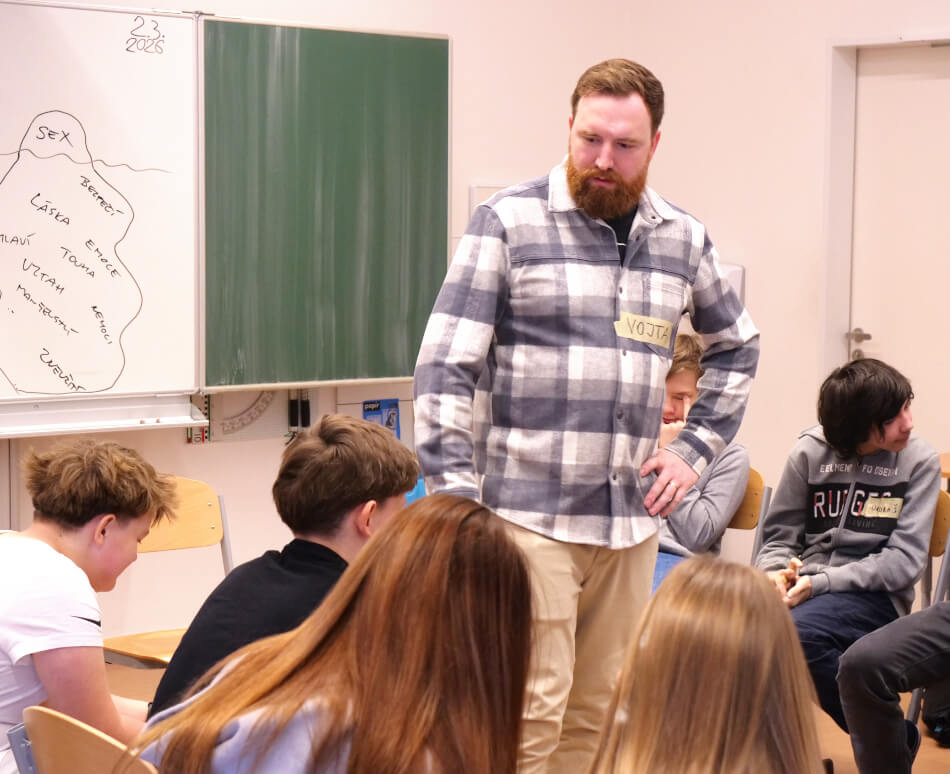
On the board behind Vojtech, the topics they will be covering in today’s program are slowly being added.
Right at the start, one of the key questions is posed: “What comes to your mind when you hear the word ‘sexuality’?”
The students’ answers also serve as subtopics that will be explored throughout the rest of the program. In each class, the answers are slightly different, and consequently, the topics covered vary as well, since they are tied to the current needs of those present.
In this class, for example, the topics include: safety, gender, abuse, diseases, children, desire, love…
Very interesting moment, bordering on intimacy, occurs when Vojtech asks the students to close their eyes and focus only on themselves. He will ask them questions, and they can raise their hands to indicate a “yes” answer. I’m curious myself to see if they’ll be afraid to be honest.
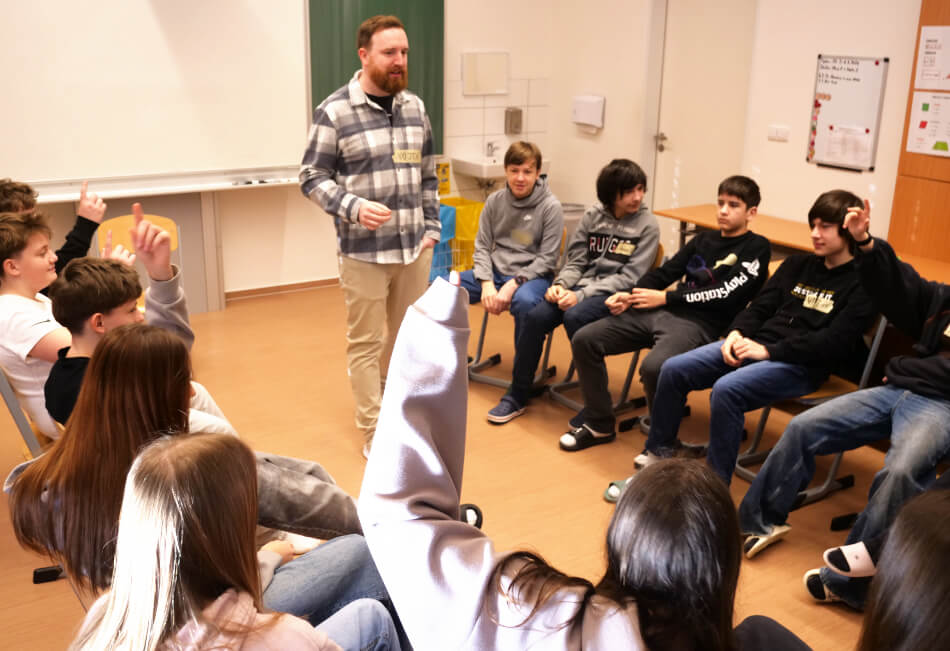
This isn’t just about raising hands; it’s a thoughtful effort to create an atmosphere of trust and acceptance where the teenagers can discuss intimate and complex topics.
The first, test question is: “Do you think it’s cold outside?” More than half answer, but it’s clear that this has little to do with openness so far. Then he starts to “turn up the heat” with questions:
“Do you feel embarrassed when people talk about sex?”
“Who among you has ever been in a relationship?”
“Who has had more than three relationships?”
“Who hasn’t been in a relationship yet but would like to?”
I can’t imagine anyone raising their hand if an atmosphere of trust hadn’t been established. I was particularly pleased that the classmates trusted each other enough to keep their eyes closed and speak up calmly, even though the questions were sometimes quite intimate.
Vojtech pulled off a real ‘masterpiece’—in the sense of engaging in a discussion with teenagers about very personal topics while showing complete respect for everyone.
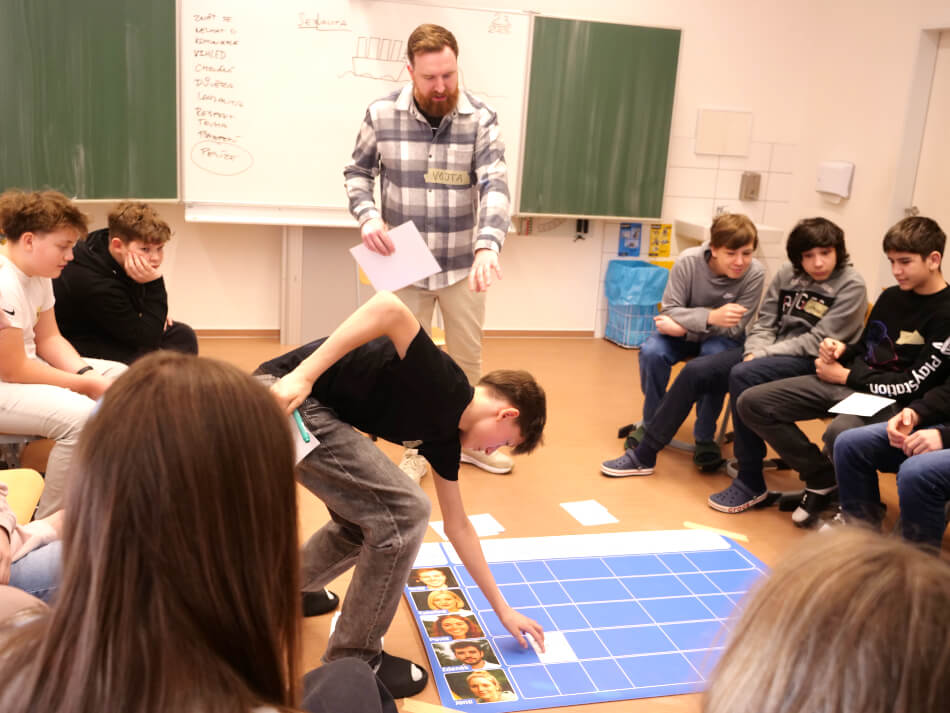
Vojtech introduces the five people on the poster and their stories to the teenagers, and the students have the opportunity to express their opinions and sympathies.
After the break, the students were shown a picture on a screen of five different people between the ages of 15 and 30, and they expressed their opinions and feelings toward them. Vojtech then gradually revealed more and more information about these people, and the students adjusted their opinions and feelings accordingly.
The photos were fictional, the names made up, but the stories were real. At the same time, he continuously summarized the topics that arose in connection with the new information about these people: their greatest life disappointment, number of partners, number of children, age of first sexual intercourse, etc. It was very interesting to observe how the students’ opinions of individual people changed, but especially the discussion about why that was the case.
The very varied program culminated in the third hour with a Q&A session based on anonymous questions.
At the end of the program, it came as no surprise that the students applauded and gave Vojtech a thumbs-up in their final feedback. I believe that the entire program was—and will continue to be—very meaningful for them.
Martin Stavjanik, the Authorized Supervisor of the HY Program workers