Eating disorders are a critital topic in mental health and wellness for pupils and students of all ages today. Many adolescents have someone in their circle who is affected by this issue, yet they may not know how to handle it or may not acknowledge the difficulties involved. Sharing experiences in the safe space of a group can bring relief to everyone.
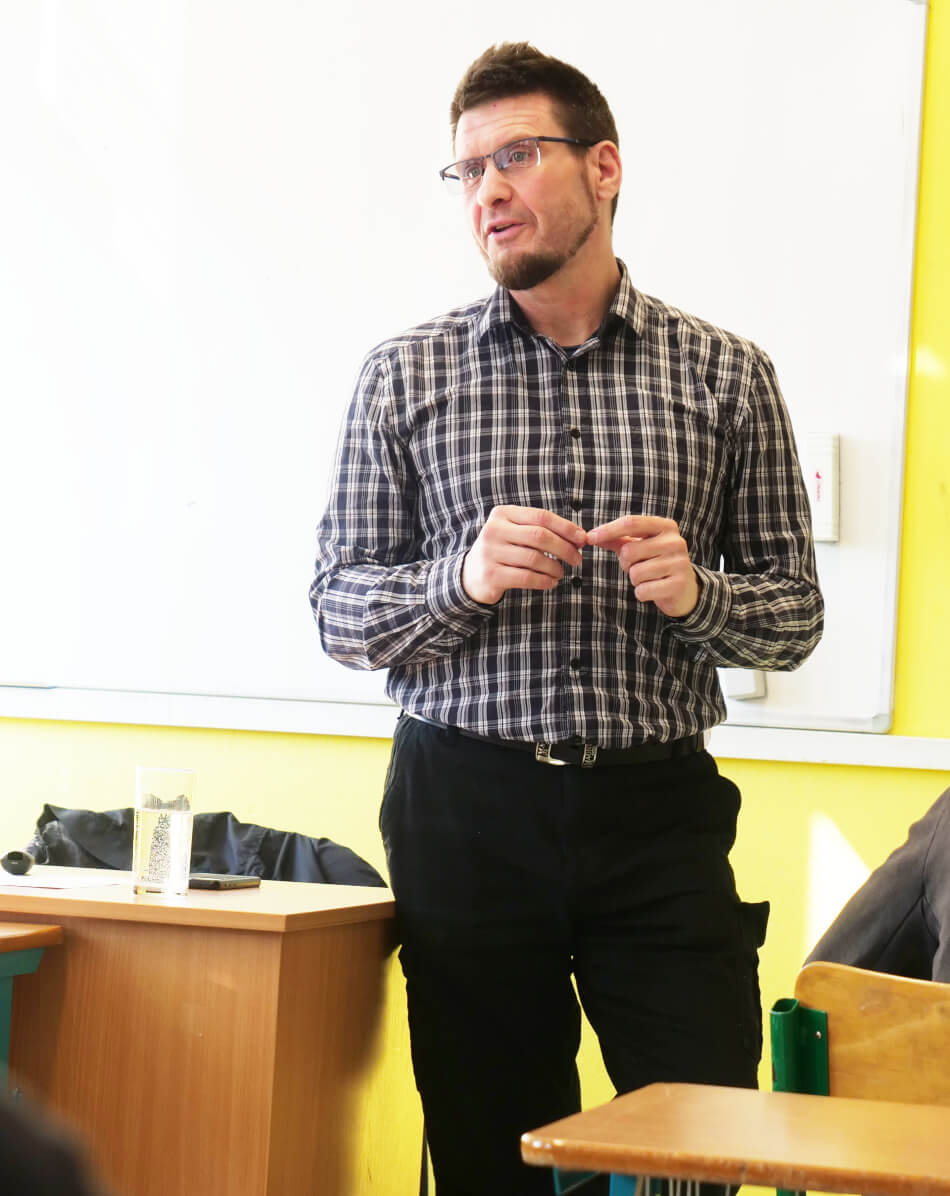
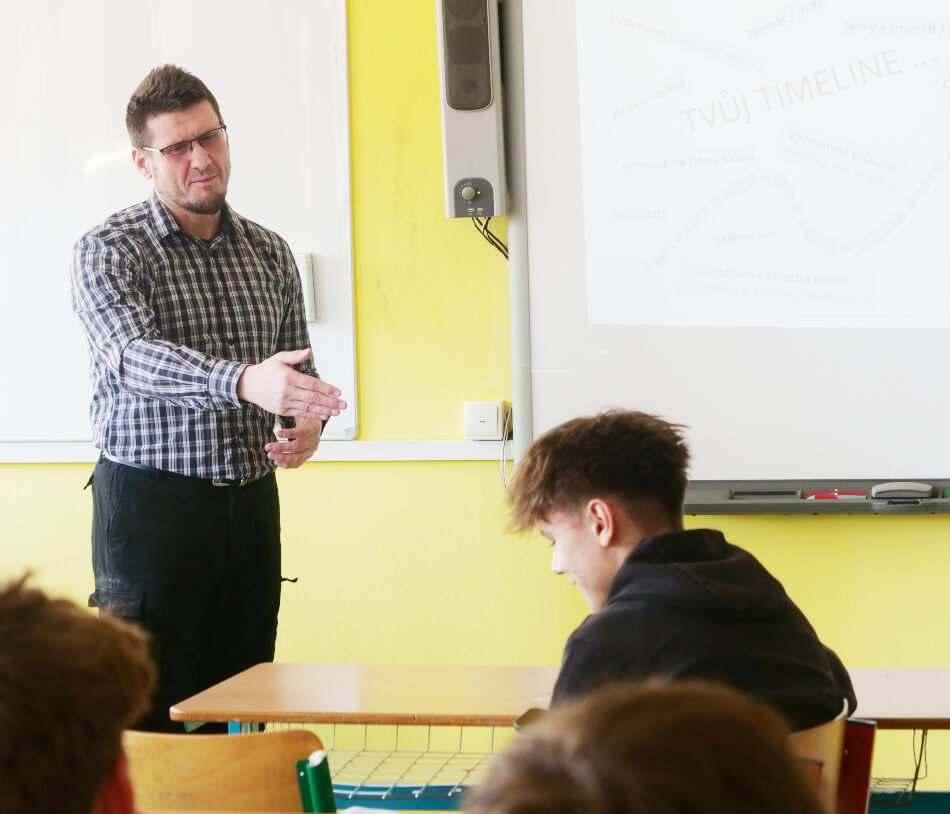
Without an atmosphere of trust and safety, today’s discussion would be meaningless. Thanks to Premysl’s approach, the students aren’t afraid to share their life stories and experiences.
The program on eating disorders is a welcome opportunity to share new and interesting information in this field. Students from the nursing high school, for whom this topic is covered in their textbooks and curriculum, attended today’s session with a variety of expectations.
The meeting with Premysl Sedenka is somewhat different from other professional discussions. Not due to expertise, but primarily to the profound impact of his personal story, which deeply moves the students.
Premysl aims to create an atmosphere of trust and safety. For him, this means creating an environment where he can share his own life’s struggles and traumas. This fosters in the students a sense of closeness to the person who is opening up, as well as the realization that they are not alone in experiencing similar failures. They come to realize that there is a solution, that they are not the only ones experiencing these anxieties, emotions, and fears in such a strange way, but that it is, in a way, normal.
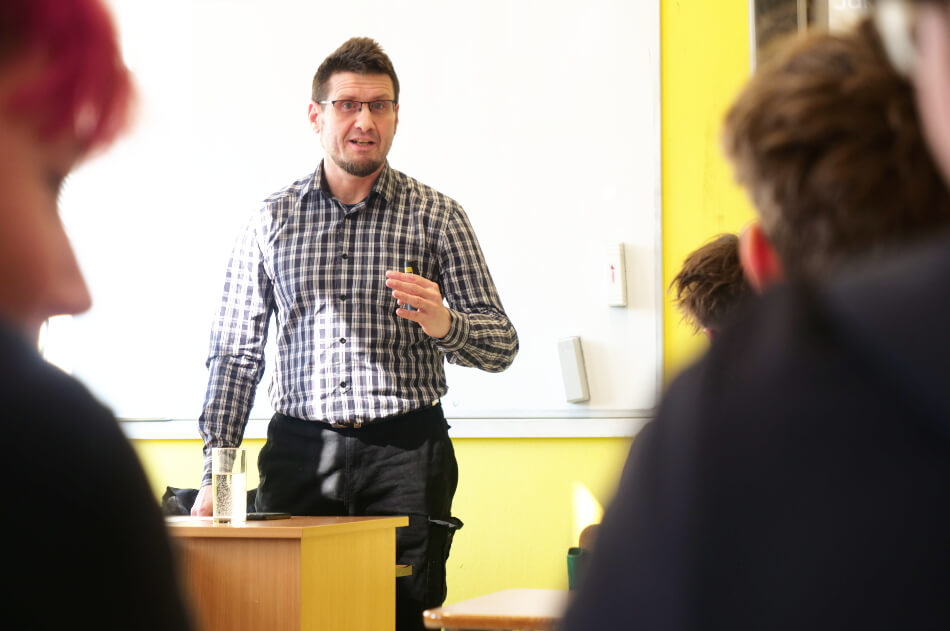
In addition to his professional expertise, Premysl has a wealth of personal experience, which he shares with the students in a very sensitive manner.
When Premysl introduces questions for small group discussions, I sense the intimacy of the moment and worry whether the students will want to share this with one another:
“How do you think today’s world or society puts pressure on people to have a certain body type?”
“Do you think stress or anxiety might be related to eating disorders in some way? If so, how?”
“Have you or anyone close to you ever voluntarily gone on a diet, or, conversely, overeaten? If so, what led to that?”
Eventually, however, it’s time for a wrap-up with the whole class, and it’s abundantly clear that Premysl has succeeded (and likely not for the first time) in getting several students in the room to open up about their problems. His authenticity opened the door to their hearts, inspiring a willingness to listen and to share.
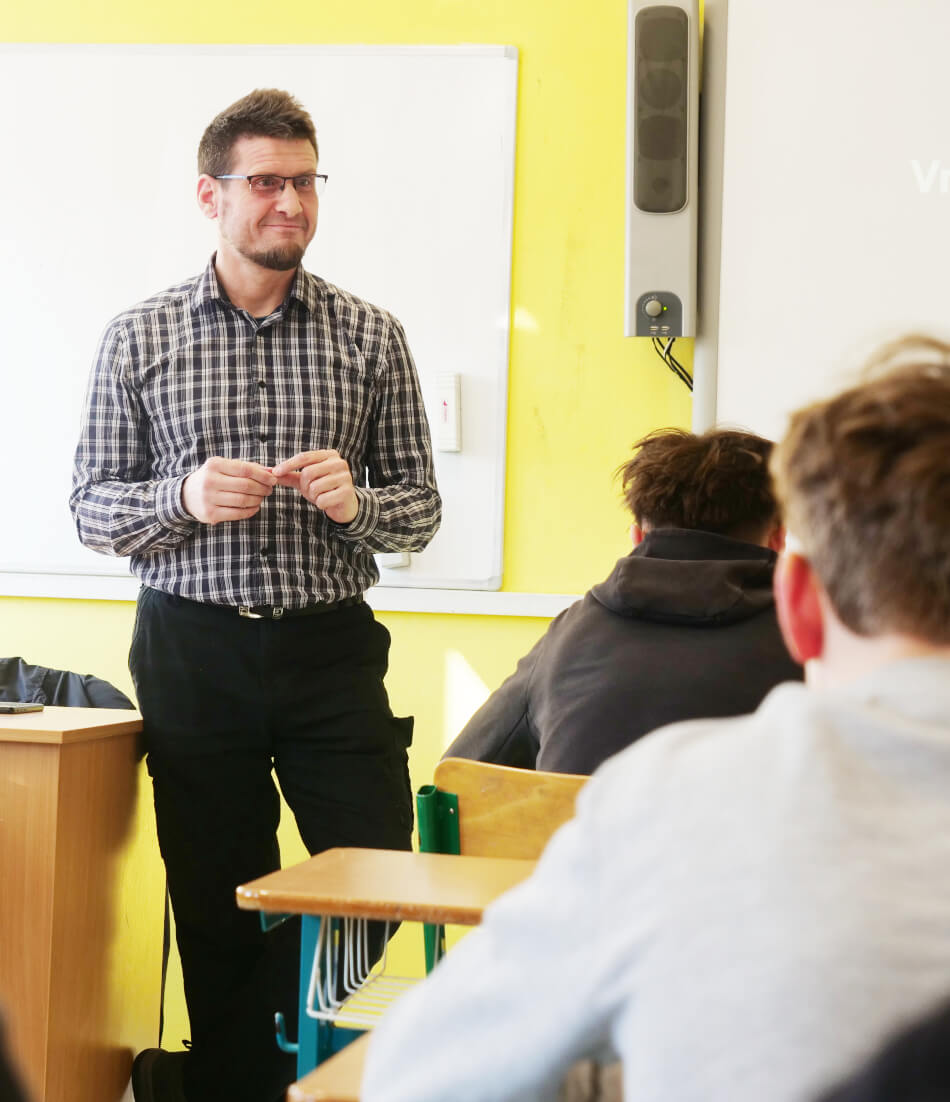
Thanks to Premysl’s program, students can take away the lesson that self-acceptance and a healthy self-image are very important.
I also observe two similar programs with Premysl in ninth-grade classes, and I can see that his story resonates. Here, too, everyone present understood that he hadn’t come to lecture them on what to do with their lives, but rather to share his story—within the context of a specialized topic—a story that has great potential to change attitudes and behavior.
He speaks as someone who has gone through a profound experience in life—a time when his daily thoughts revolved solely around his own body and a distorted image of how he should look—and he humbly warns against this way of thinking. After all, it is anorexia nervosa, so most of it takes place in the mind, not in reality.
Ultimately, when we come to the conclusion that the very foundation—the most important and, at the same time, the most difficult thing—is self-acceptance, I’m not at all surprised by the simplicity of the underlying idea, which is also reflected in the feedback:
“Today we learned to love ourselves, and it’s much harder than it seems. Harder than math and other subjects that stress us out so much.”
Martin Stavjanik, the Authorized Supervisor of the HY Program workers